How to Handle Time-Wasters on OnlyFans
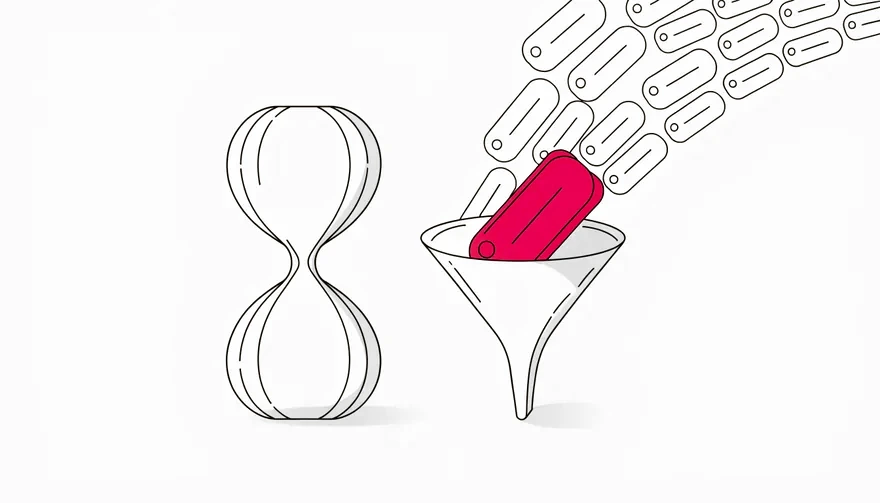
Every creator and agency deals with OnlyFans time wasters: fans who chat for hours, ask for free content, and never actually buy. The usual advice is to spot them fast and stop wasting your team's time on them. That advice is not wrong, and the first half of this guide covers exactly how to read the signals. But it rests on one assumption worth questioning: that a long conversation with a non-buyer is a cost you cannot afford.
It is a cost only because a human chatter's time is scarce and expensive. Take that cost away, and the whole idea of a time-waster starts to fall apart. So this guide does two things: it shows you how to recognize a low-intent fan, and then it shows you why, with the right setup, that fan is not a problem to manage but revenue that is simply taking its time.
How to Spot an OnlyFans Time-Waster Early
The earlier you can tell the difference between a real spender and a fan who's just here to chat for free, the less time you lose. A few patterns show up consistently.
- Long messages, no questions about content. Fans who are genuinely interested ask about photos, videos, or customs. Fans who just want conversation talk about themselves and rarely ask what's available.
- Deflecting every offer. "Maybe later" or a topic change every time you mention a PPV or a price is a strong signal, especially the second or third time it happens.
- Asking for free samples repeatedly. One request for a preview is normal. Repeated requests after you've already answered are a pattern, not a coincidence.
- No response to pricing at all. Real spenders react to a price, even to negotiate. Silence after a clear offer is often the clearest tell of all.
None of these on their own is proof. Together, especially after a fan has had two or three chances to buy and hasn't, they are a reliable read that the fan is not ready for an offer yet. What you do with that read is where the old playbook and the new one part ways.
Qualification Tactics That Stay Friendly and Move Toward an Offer
The goal isn't to interrogate every new fan, it's to steer the conversation toward an offer early and naturally, so you find out where someone stands without making it feel transactional.
- Lead with a soft offer early. Introducing a PPV or a menu item naturally in the first few exchanges tells you a lot before you've invested much time.
- Ask questions that double as qualification. "What are you into?" moves the conversation toward content while reading as genuine interest, not a sales pitch.
- Watch how they react to a price, not just what they say. Quick engagement, even a negotiation, is a buyer signal. A hard pivot away from the topic usually isn't.
- Give one graceful second chance. Fans sometimes need a beat before they're ready to spend. One more natural offer later in the conversation catches real spenders who just needed warming up.
Setting Boundaries Without Being Rude
You don't need to be cold to protect your time. A few lines, used consistently, let you disengage gracefully without burning a bridge or risking a bad interaction.
- Redirect instead of ignoring. Something like "I love chatting, but my full attention, and the good stuff, is behind my PPVs" keeps things warm while making the boundary clear.
- Use scarcity honestly. Mentioning that you're juggling a lot of messages today is often true, and it naturally shortens a conversation that isn't going anywhere.
- Never go silent mid-conversation. A fan who gets ghosted mid-chat is more likely to leave with a bad impression than one who gets a warm, brief redirect.
- Let go without resentment. Some fans are never going to buy, and that's fine. The goal is protecting your time, not winning every single conversation.
Time-Wasters Are a Staffing Problem, Not a Fan Problem
Here is the part the standard advice skips. A time-waster is not expensive because of anything the fan does. It is expensive because a chatter's time is scarce and costs money. Every minute a paid human spends on a fan who is not buying is a minute not spent on one who is, so on a human team the rational move really is to cut the non-buyer loose. The cost is real, but notice what it is a cost of: it is a staffing cost, not a fan cost.
Change the cost of a conversation and the whole problem dissolves. When the marginal cost of one more message drops toward zero, the fan who talks for hours without buying stops being a drain and goes back to being what he always was: a lead that is not warm yet. The only reason he ever looked like a lost cause is that no human could afford the hours it would take to warm him up.
The AI Does Not Triage, It Absorbs Everything
This is where automated chatting inverts the whole playbook. A human team triages because it has no choice. An AI does not: it can give every fan, including the one a human team would have quietly abandoned, a complete, patient conversation, for hours or across days, without costing you a single shift. It listens, asks about his life and what he is into, finds common ground, and actually gets to know him, exactly the treatment no chatter can afford to give a fan who has not spent a cent.
That does not mean selling to everyone the moment they arrive. The signals from the first half of this article still matter, they just get used differently. Instead of telling you when to give up on a fan, they tell the AI when a fan is not ready, so it holds the offer back, keeps building the relationship, and only starts the selling part of the script once the fan actually shows he is warm. It waits for the right moment instead of forcing it, then it sells.
A time-waster is only a waste of time you are paying for. Remove the cost of the conversation, and he is just a customer who needed longer.
That is what OnlyChat is built to do. It runs your script in the creator's voice across every conversation at once, gives the low-intent fan the long, patient build a human would have skipped, and holds the offer until the fan is ready, so the fans a human team writes off as time-wasters become the ones you finally get paid by.
Time-wasters only exist when time costs. Give every fan a complete, patient conversation, in your voice, that sells when they are ready.
Get started →